
Electricity Peak Hours in Pakistan: Every DISCO, Every Quarter
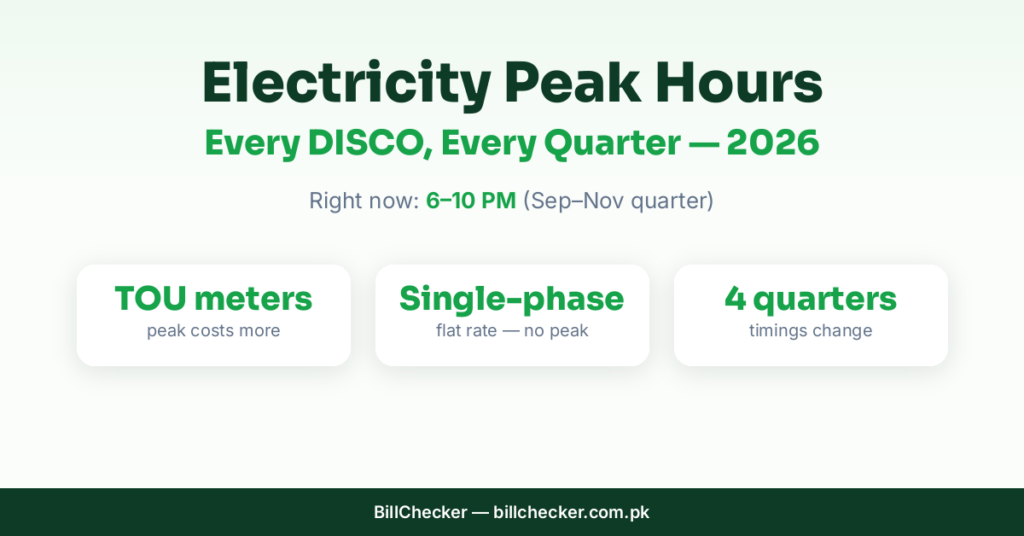
If you’re on a time-of-use (TOU) meter, the clock decides what your electricity costs: units consumed during peak hours are billed at a higher rate than the exact same units used off-peak. Right now — the September–November 2026 quarter — peak hours are 6 PM to 10 PM for most DISCOs. This guide gives you the complete quarterly calendar for every DISCO, who peak hours actually affect, and how much shifting load can save.
Peak Hours Right Now: 6–10 PM
We are in the Sep–Nov quarter, so until November 30, 2026, the evening peak window is 6:00 PM – 10:00 PM across LESCO, IESCO, FESCO, GEPCO, PESCO, HESCO, SEPCO, QESCO, and TESCO. (MEPCO follows the same quarterly framework per its NEPRA tariff determination.)
The Full 2026 Quarterly Calendar
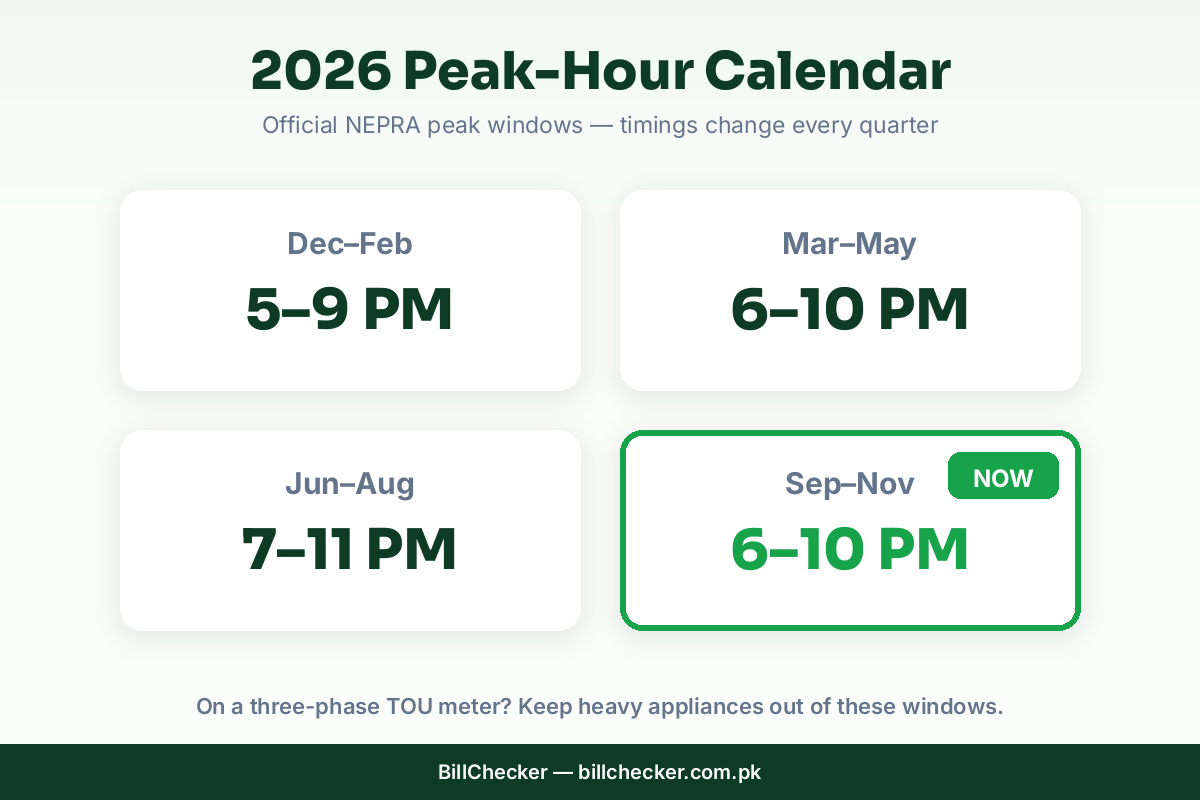
NEPRA sets peak hours quarterly — they shift with the seasons because evening demand peaks at different times of year:
| Quarter | Peak Window | Why |
|---|---|---|
| Dec – Feb | 5 – 9 PM | Early winter darkness, heating load |
| Mar – May | 6 – 10 PM | Evenings warm up, cooling starts |
| Jun – Aug | 7 – 11 PM | Peak summer — latest, longest window |
| Sep – Nov (now) | 6 – 10 PM | Cooling tapers, evenings shorten |
This quarterly framework comes from NEPRA’s tariff determinations (MEPCO’s determination confirms the summer 7–11 PM window explicitly). Some third-party sites publish a simplified summer/winter split instead — the quarterly version above is the authoritative one and matches what’s printed in the tariff schedules.
Who Do Peak Hours Actually Affect?
| Your Meter | Peak Hours Effect |
|---|---|
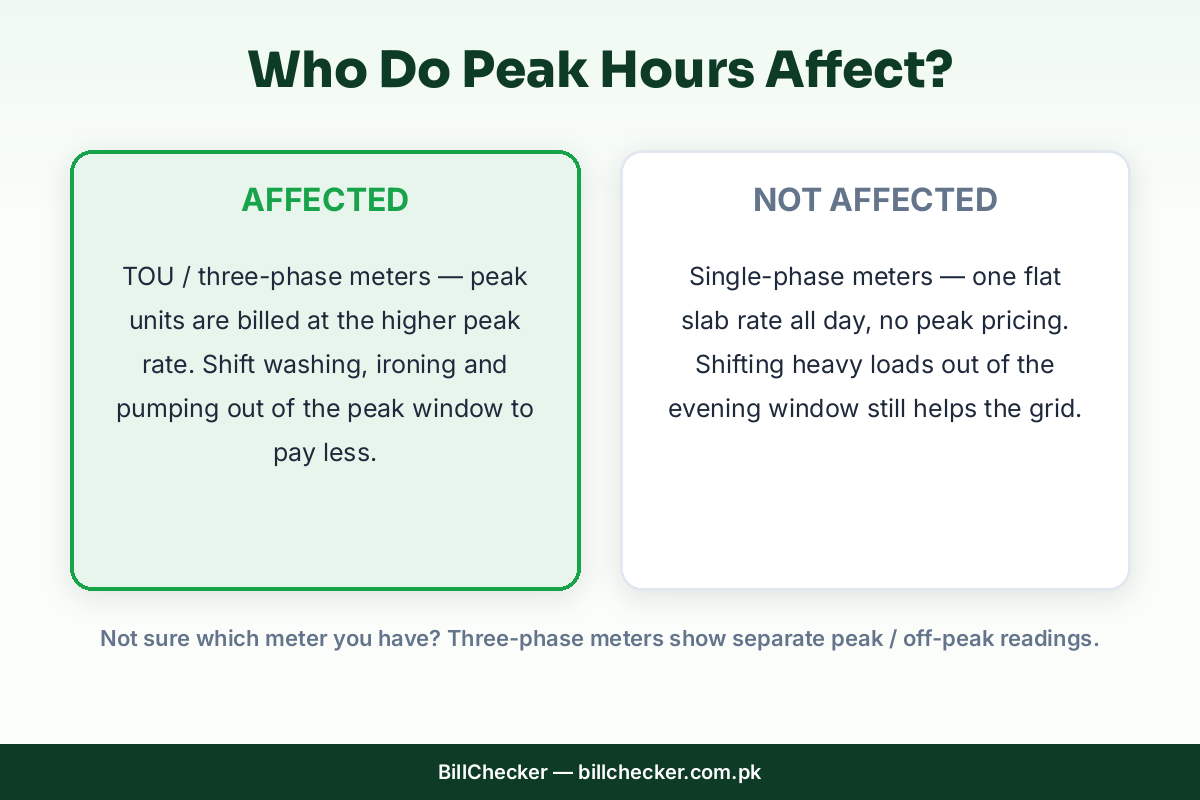
| TOU / three-phase meter | Direct — peak units billed at the higher TOU peak rate, off-peak at the lower rate |
| Single-phase meter | None on the rate — you pay flat slab rates all day. Shifting still helps grid stability (and everyone’s FPA) |
How to tell: look at your bill — a TOU bill shows separate peak and off-peak unit readings. A single-phase bill shows one reading. Not sure? Our 2026 tariff guide explains both structures.
How Much Can Shifting Save?
The saving formula is simple: shifted units × (your peak rate − your off-peak rate), both printed on your TOU bill. The appliances worth moving:
| Appliance | Typical Load | Run It Instead |
|---|---|---|
| Washing machine | 0.8 – 1.2 kW | Morning, before 6 PM |
| Iron | 1.0 – 2.0 kW | Early morning, full basket at once |
| Water pump/motor | 0.5 – 1.0 kW | After 10 PM or daytime |
| Electric geyser | 1.5 – 2.0 kW | Morning, thermostat at 45–50°C |
Two habit changes — laundry and ironing out of the 6–10 PM window — are the cheapest savings available: free, starting tonight.
Frequently Asked Questions
What are peak hours for electricity in Pakistan right now?
6 PM to 10 PM — the September–November 2026 quarter. The window changes quarterly: 5–9 PM (Dec–Feb), 6–10 PM (Mar–May), 7–11 PM (Jun–Aug), 6–10 PM (Sep–Nov).
Do peak hours apply to single-phase meters?
No. Single-phase consumers pay the same slab rate around the clock. Peak/off-peak pricing applies only to TOU (usually three-phase) meters.
Why do peak hours change every quarter?
NEPRA aligns the window with seasonal demand — summer evenings peak later (7–11 PM) because cooling load extends past sunset; winter evenings peak earlier (5–9 PM).
Is the peak rate the same for all DISCOs?
The peak timing follows the national quarterly framework above. The peak rate is set per consumer category in NEPRA’s tariff — check the TOU section of your own bill for your exact numbers.
Sources
Quarterly peak windows per NEPRA tariff determinations (MEPCO determination confirms summer 7–11 PM; LESCO tariff documentation confirms the quarterly framework), October 2026. Related: 2026 tariff guide, 12 ways to reduce your bill.