
Protected vs Unprotected Electricity Consumers in Pakistan: The 200-Unit Rule
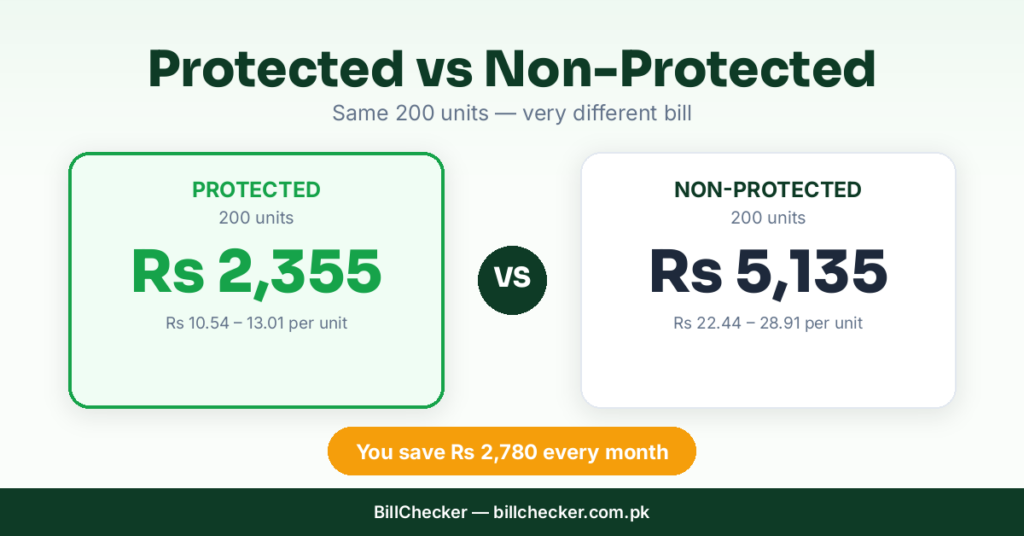
Two homes on the same street can use the same 200 units and pay very different bills. One pays about Rs 2,955, and the other pays about Rs 6,382. The difference is one word on the bill: protected or unprotected.
This guide explains who counts as protected and what the status saves. It also covers how you lose it and get it back.
What Protected Means
A protected home used 200 units or less in each of the last six months. NEPRA created the category to shield low-use homes from the full rates.
Every other home counts as unprotected. You don’t apply for either status, because your power company sets it from your meter readings. Every bill prints your category.
Protected and Unprotected Rates in 2026
| Units in the month | Protected rate (Rs per unit) | Unprotected rate (Rs per unit) |
|---|---|---|
| 1–100 | 10.54 | 22.44 |
| 101–200 | 13.01 | 28.91 |
Fixed charges also differ. Protected homes pay Rs 200 or Rs 300 per kW of sanctioned load. Unprotected homes pay from Rs 275 up to Rs 675 per kW, depending on their slab.
Protected homes also keep one previous slab. Their first 100 units always cost Rs 10.54, even in a 150-unit month. Unprotected homes pay one rate on every unit, based on the slab their total falls in.
The Same 200 Units, Two Different Bills
Here is a home with a 2 kW sanctioned load, before fuel adjustments and tax.
| Category | Energy charge (Rs) | Fixed charge (Rs) | Total (Rs) |
|---|---|---|---|
| Protected | 100 × 10.54 + 100 × 13.01 = 2,355 | 600 | 2,955 |
| Unprotected | 200 × 28.91 = 5,782 | 600 | 6,382 |
The protected home saves about Rs 3,427 a month on identical use. Over a year, that adds up to more than Rs 41,000.
The 200-Unit Cliff
Protection stops the moment a month goes above 200 units. Your company bills that month at unprotected rates on every unit, so one extra unit can add thousands.
| Units | Category | Energy charge (Rs) | Fixed charge (Rs) | Total (Rs) |
|---|---|---|---|---|
| 199 | Protected | 2,342 | 600 | 2,942 |
| 200 | Protected | 2,355 | 600 | 2,955 |
| 201 | Unprotected | 6,653 | 700 | 7,353 |
Going from 200 to 201 units adds about Rs 4,398 before tax. The cost then continues, because you need six straight months at 200 units or less to become protected again.
How to Stay Protected
- Treat 200 units as a hard limit, and aim for 180 to leave room for a hot week.
- Read your meter about ten days before the reading date printed on your bill.
- Run the iron, water motor and washing machine less often in a heavy month.
- Watch summer closely, because one month of AC use is the most common way homes lose protection.
- Photograph your meter on reading day, so an estimated reading can’t push you over by mistake.
Protected, Lifeline and Unprotected Compared
| Category | Who qualifies | Slab benefit |
|---|---|---|
| Lifeline | 100 units or less this month and in each of the last 12 months | None, every unit at Rs 3.95 or Rs 7.74 |
| Protected | 200 units or less in each of the last 6 months | First 100 units at Rs 10.54 |
| Unprotected | Every other home | None, one rate on every unit |
Lifeline homes also skip fixed charges and the fuel adjustment. Our lifeline guide explains that category in full.
Check your latest bill on the page for your power company.
- LESCO bill check
- MEPCO bill check
- FESCO bill check
- IESCO bill check
- GEPCO bill check
- PESCO bill check
- HESCO bill check
- SEPCO bill check
- QESCO bill check
- TESCO bill check
Frequently Asked Questions
How do I become a protected electricity consumer?
Keep your use at 200 units or less every month for six months in a row. Your power company then applies protected rates automatically. There is no form to fill and no office to visit, because the status comes from your meter readings.
What happens if I use 201 units?
Your company bills that month at unprotected rates on every unit. So a 2 kW home pays about Rs 7,353 before tax, not Rs 2,955. You then need six straight months at 200 units or less to regain protected rates.
Do protected homes pay fixed charges?
Yes, since February 2026. Protected homes pay Rs 200 per kW of sanctioned load up to 100 units. From 101 to 200 units, they pay Rs 300 per kW. Only lifeline homes are exempt from fixed charges.
Do protected homes pay the fuel adjustment?
Yes, protected homes pay the monthly fuel adjustment and the quarterly adjustment. Only lifeline homes, prepaid meters and EV charging stations are exempt from the fuel adjustment. Protected status lowers your rates, but it doesn’t remove the adjustments.
Can a home with a time-of-use meter get protected rates?
No, the protected category covers homes without a time-of-use meter. Homes with a sanctioned load of 5 kW or more usually have these meters. They pay peak and off-peak rates instead.
Sources
- S.R.O. 279(I)/2026 residential tariff schedule, as published on IESCO’s tariff page
- Profit: NEPRA introduces Rs 200–675 fixed monthly charges (12 February 2026)
- NEPRA determination of September 2021, for the lifeline and protected definitions
BillChecker.com.pk is an independent website. It isn’t part of any power company, PITC, NEPRA or the Government of Pakistan. Rates change, so always check the figures printed on your own bill.