
Net Billing in Pakistan 2026: Solar Buyback Rates, Rules & Is It Worth It?
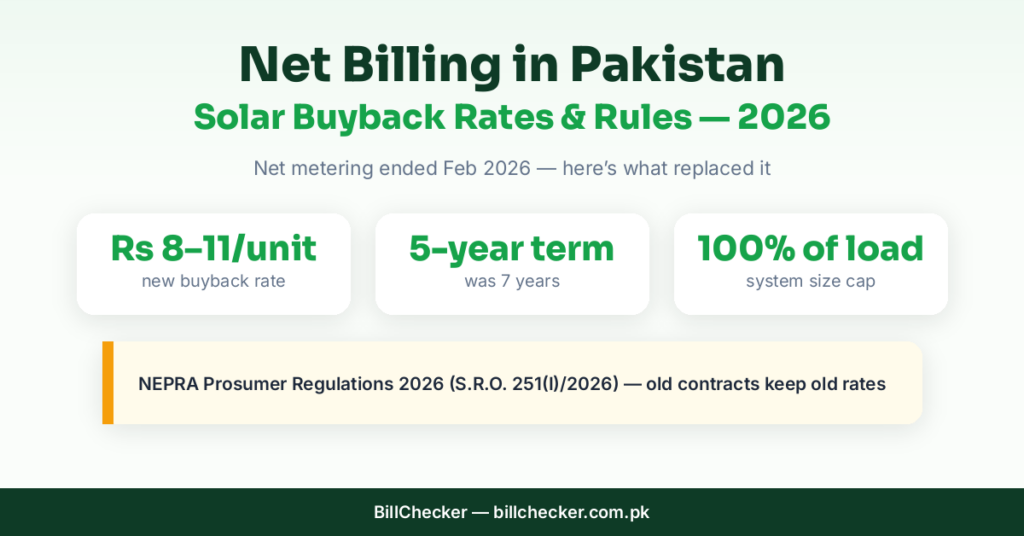
If you’re researching solar in Pakistan, forget everything you heard about “net metering” — NEPRA ended net metering on February 9, 2026 (S.R.O. 251(I)/2026, the Prosumer Regulations). What replaced it is net billing, and the economics are very different. This guide has the verified 2026 rules, the actual buyback numbers, and the honest math on whether solar still pays.
What Actually Changed
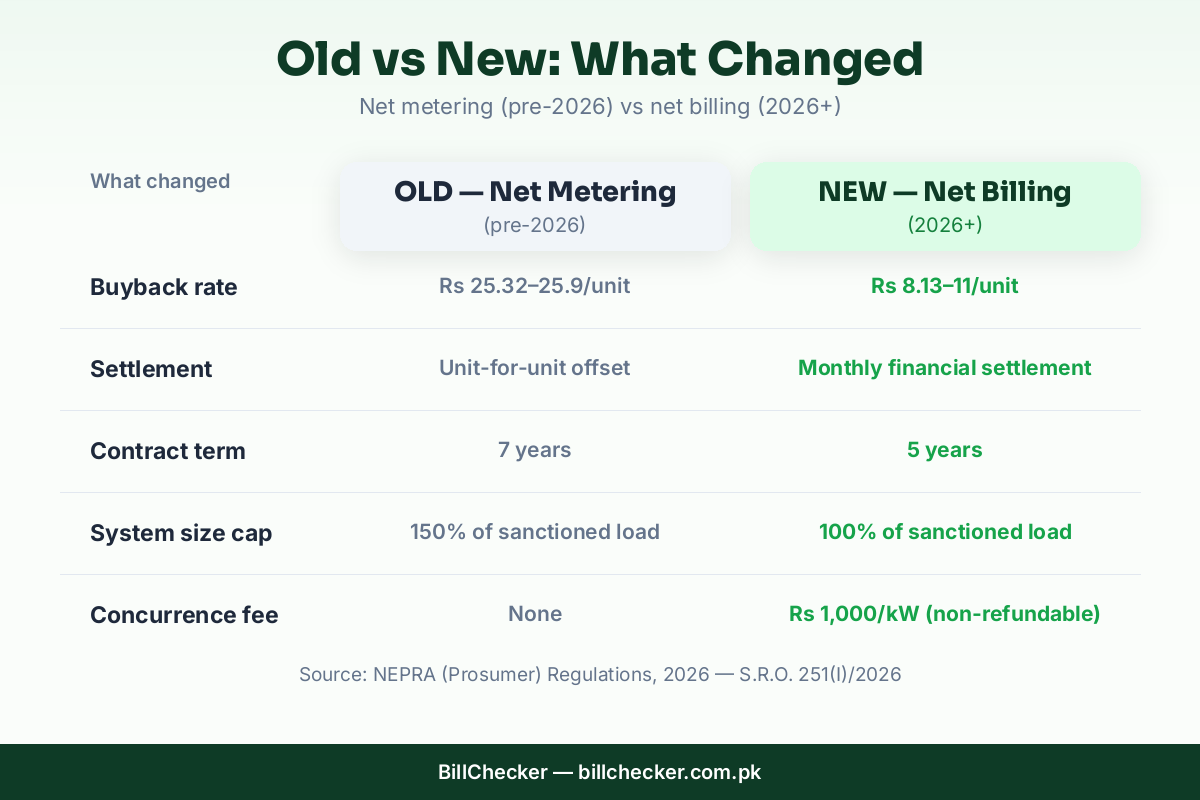
| Rule | OLD — Net Metering (pre-2026) | NEW — Net Billing (2026+) |
|---|---|---|
| Buyback rate | Rs 25.32–25.9/unit | Rs 8.13–11/unit |
| Settlement | Unit-for-unit offset | Monthly financial settlement |
| Contract term | 7 years | 5 years |
| System size cap | 150% of sanctioned load | 100% of sanctioned load |
| Concurrence fee | None | Rs 1,000/kW (non-refundable) |
Existing net-metering users: NEPRA has proposed an amendment that keeps their old terms (Rs 25.32–25.9/unit) until their current contracts expire. Check the final notification before you plan around it. Two more constraints: no new connection if the area transformer is already at 80% of rated capacity, and systems of 250 kW or more need a load flow study.
The Math That Matters
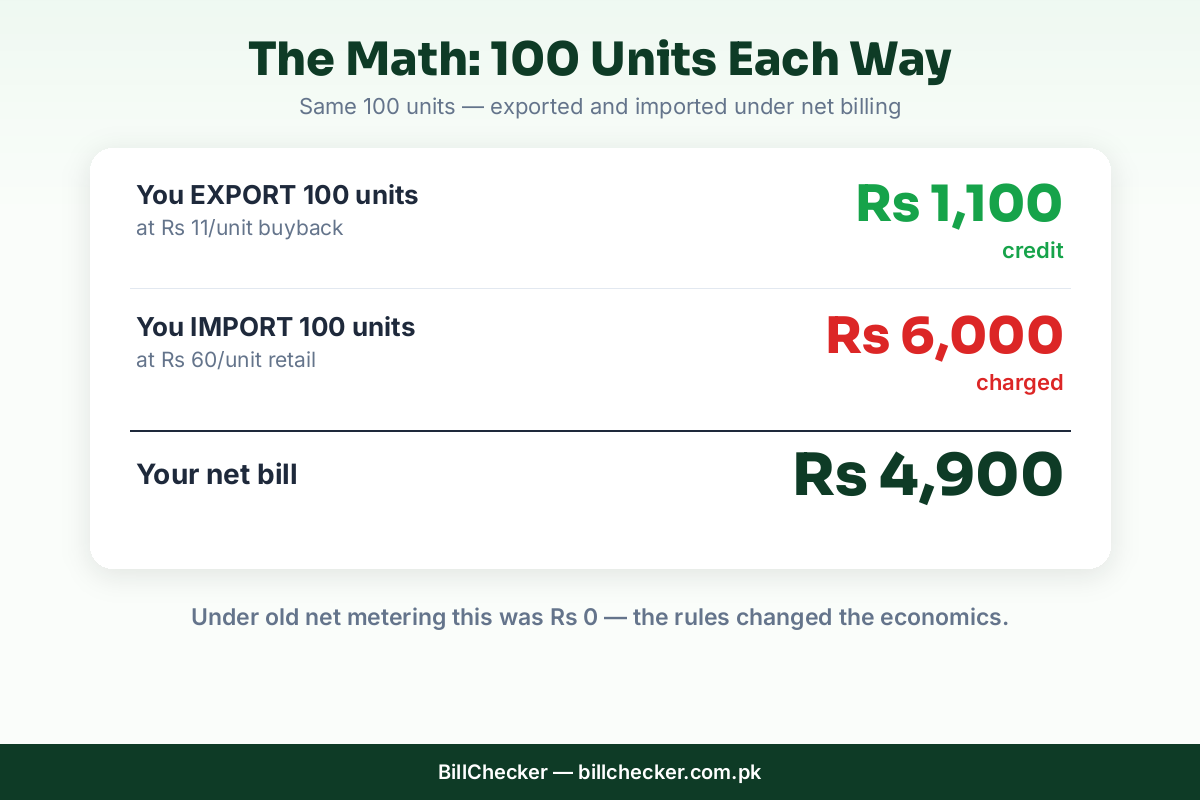
Under net billing, your exported units earn money (a credit), but they’re valued far below what imported units cost. Worked example for a new 2026 prosumer:
- You export 100 units → credit of Rs 1,100 (at Rs 11/unit)
- You import 100 units → charged Rs 6,000 (at about Rs 60 per unit all-in, which is typical for a home above 700 units)
- Your net bill: Rs 4,900
Under the old net metering, that same month was Rs 0. The strategy this forces: self-consume as much as possible during the day (run heavy loads when the sun is up) and treat exports as a small bonus, not the business case. Sizing your system at 100% of sanctioned load — the new cap — matters more than ever.
Is Solar Still Worth It in 2026?
Yes, but for a different reason than before. The payback now comes from avoided imports (every unit you self-consume saves you about Rs 40 to Rs 60 in grid charges and tax, depending on your slab — see our bill-reduction guide), not from selling power back. Households with high daytime usage (ACs, motors, home businesses) still see strong returns; households that use most power at night see weaker ones. Pair the analysis with peak-hour awareness — shifting load out of 6–10 PM multiplies the savings.
How to Apply
- Apply through your DISCO (or an AEDB-licensed installer) with CNIC, property proof, and latest paid bill.
- Pay the Rs 1,000/kW concurrence fee (non-refundable).
- DISCO inspects the site and transformer capacity, then installs the bi-directional meter.
- Sign the 5-year prosumer agreement — you’re billed monthly on the financial net.
Frequently Asked Questions
Is net metering still available in Pakistan?
No. NEPRA replaced it with net billing on February 9, 2026. Under NEPRA’s proposed amendment, existing net-metering users keep their old terms until their contracts expire.
What is the solar buyback rate in 2026?
New prosumers get roughly Rs 8.13–11 per exported unit — less than half the old Rs 25.32–25.9 rate.
Can I install a bigger system than my sanctioned load?
No — systems are now capped at 100% of your sanctioned load (down from 150%).
Does exporting still zero out my bill?
No. Under net billing, exports earn a credit at the buyback rate while imports are charged at full retail — equal units exported and imported still leave a substantial bill.
Sources
NEPRA S.R.O. 251(I)/2026 (Prosumer Regulations), reported via Profit (Feb 10, 2026), Dunya News, and mmnews. Buyback figures Rs 8.13–11/unit (new) vs Rs 25.32–25.9/unit (existing) per Dunya/Profit/mmnews reporting. Related: reduce your bill, peak hours.