
How to Read Your Electricity Meter & Dispute a Wrong Reading
A wrong meter reading can inflate your bill by thousands of rupees — and it happens more often than DISCOs admit. The fix takes two minutes a month: read your own meter, photograph it, and compare with the bill. This guide shows how to read every meter type and exactly how to dispute a wrong reading.
How to Read Your Meter
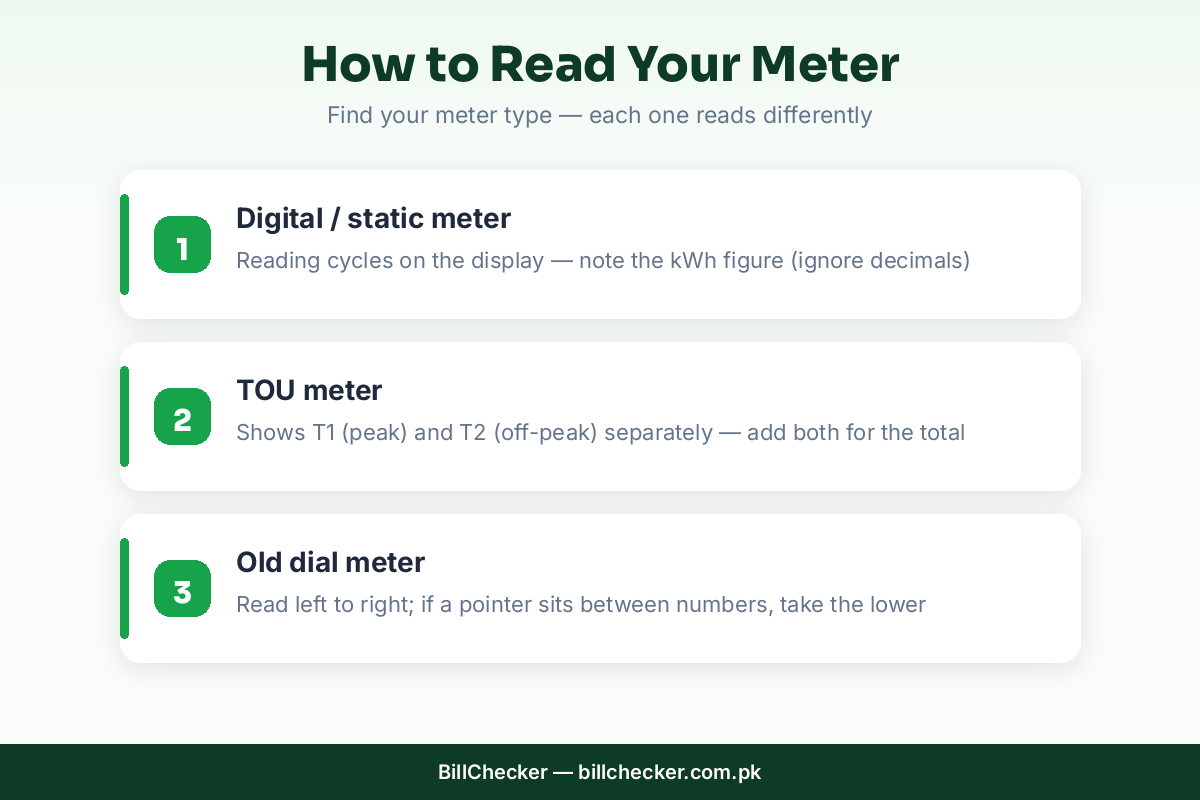
| Meter Type | How to Read It |
|---|---|
| Digital / static meter | The reading cycles on the display — note the kWh figure (ignore the decimals). This is the type on most urban connections now. |
| TOU meter | Shows T1 (peak) and T2 (off-peak) separately — add both for the total. Your bill’s peak/off-peak split comes from these. |
| Old dial meter | Read the dials left to right; if a pointer sits between two numbers, take the lower one. |
Your month’s units = this month’s reading minus last month’s reading. Compare that number with the “units consumed” on your bill — they should match within a unit or two.
Make It a Habit: The Monthly Snapshot
On the same date each month (ideally near your billing date), photograph your meter with the reading clearly visible. That photo is your evidence if a dispute ever arises — it has beaten “estimated” readings countless times. Estimated or “average” bills (marked on the bill when the reader couldn’t access your meter) are the most common source of overbilling.
Dispute a Wrong Reading in 4 Steps
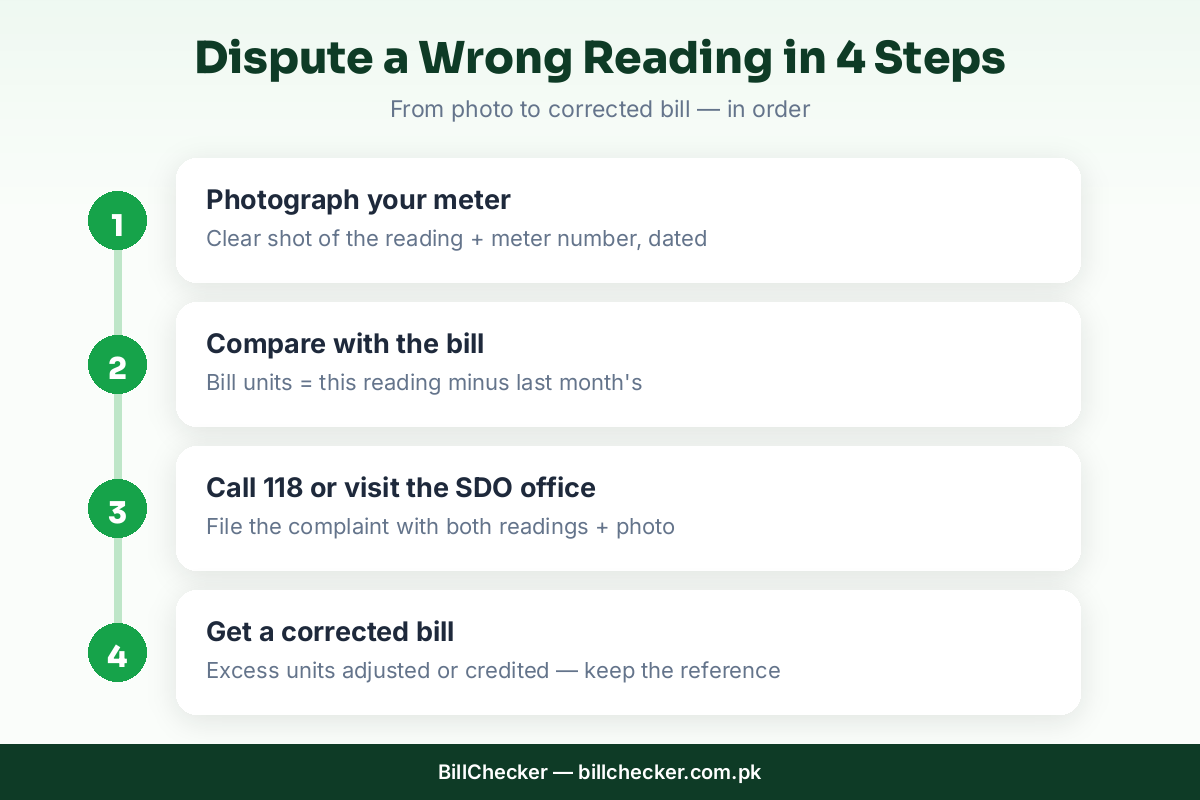
- Photograph your meter — clear shot of the current reading and the meter number, with a date.
- Compare with the bill — compute bill units (this reading minus last month’s) and check against the billed units.
- File the complaint — call helpline 118 or visit your subdivision/SDO office with both readings and the photo.
- Get the corrected bill — excess units are adjusted or credited on the next bill. Keep the complaint reference number.
Common Reading Problems
- Estimated/average billing — billed on last year’s same-month average instead of an actual reading. Your photo proves the real number.
- Reading entered wrong — a transposed digit (e.g., 4521 entered as 5421) can add hundreds of phantom units. The photo catches it instantly.
- Defective meter (fast/slow) — if readings look impossible versus your usage, request a meter accuracy test at the DISCO’s M&T lab; a faulty meter gets replaced and bills adjusted.
- Meter inaccessible — locked gate on reading day leads to estimates. Give the reader access or arrange the monthly snapshot habit.
Frequently Asked Questions
How do I know if my bill used an estimated reading?
The bill usually marks it (E or “average” status). If the billed units don’t match your meter photo, it was estimated or misread.
Can I refuse to pay a wrong bill?
Don’t refuse outright — file the dispute and pay the corrected amount once issued. Unpaid wrong bills still attract late surcharges; the complaint reference protects you during correction.
What if the DISCO ignores my complaint?
Escalate: DISCO complaint cell → NEPRA’s complaint portal → the federal ombudsman (Wafaqi Mohtasib). Keep every reference number. Our complaint guide covers the full ladder.
Does a faulty meter get replaced free?
If the lab test proves the meter defective, replacement and bill adjustment are the DISCO’s responsibility — not yours.
Sources
Procedures verified against DISCO complaint-handling practice and NEPRA consumer-service standards, October 2026. Related: reference number guide, complaint guide.